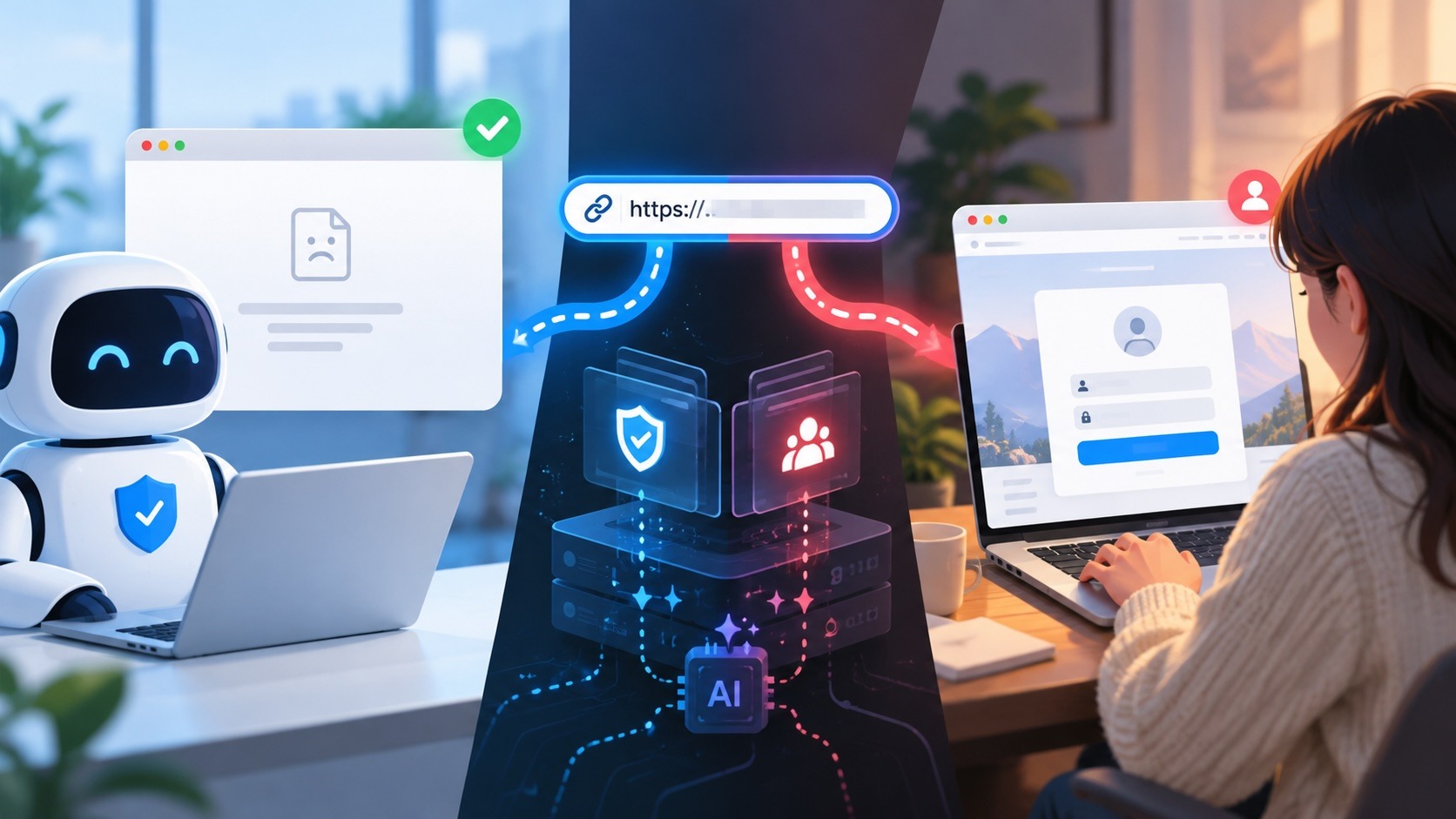
AI models are getting smarter. But intelligence alone doesn’t make a security system. What matters is the architecture around the model: the context it receives, the signals it considers, the controls it operates within, and what happens before a risky action is allowed to proceed.
A harness doesn’t create power. It makes power usable.
A climbing harness doesn’t climb the mountain. A wiring harness doesn’t generate electricity. And in software, a test harness doesn’t replace the system being tested.
A harness connects things. It creates boundaries. It gives individual components the context and controls they need to work together safely.
That concept is becoming increasingly important in cybersecurity — especially as AI becomes part of both how attacks are created and how defenders respond to them.
And nowhere is that more relevant than the browser.
What is a security harness?
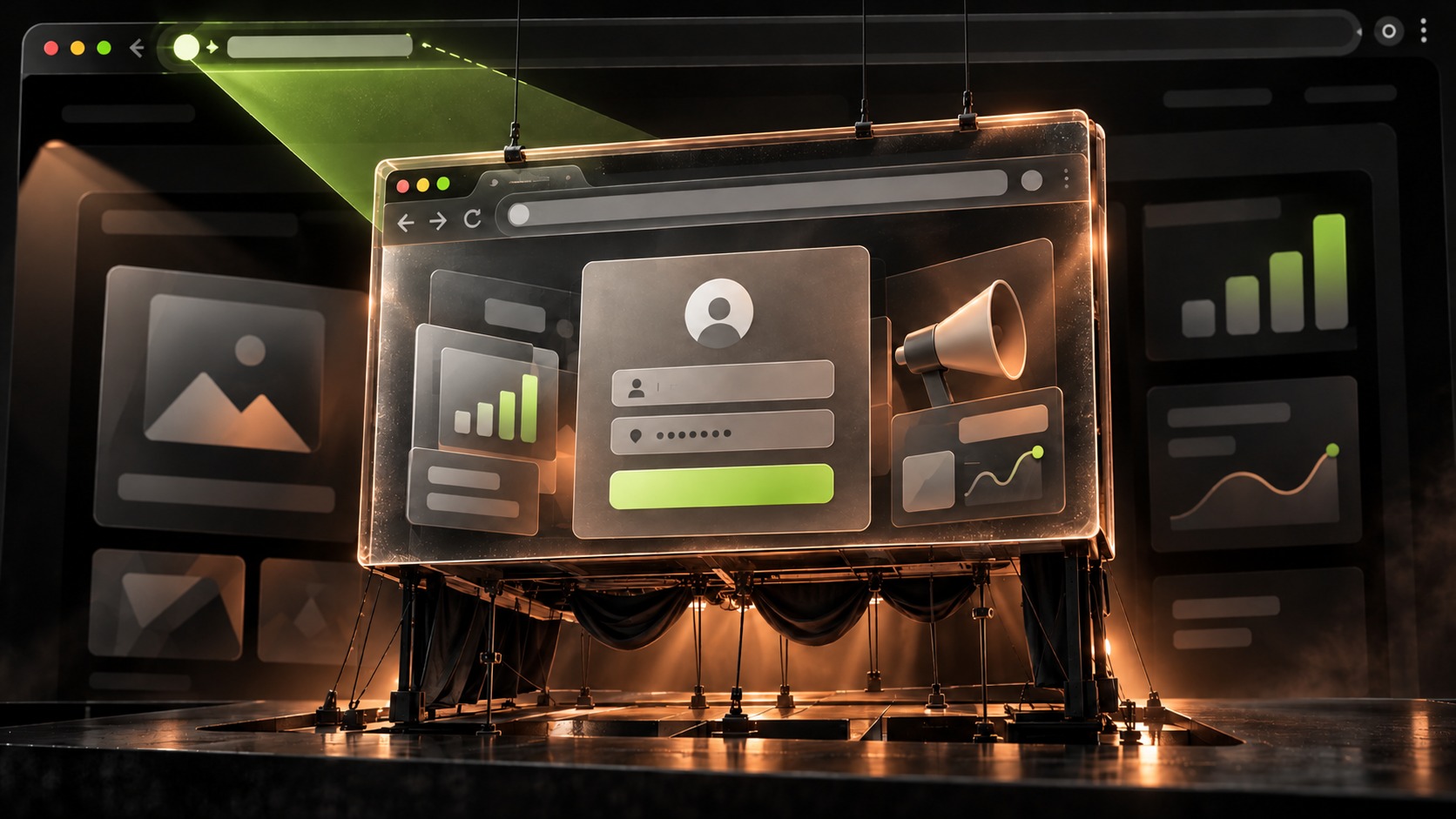
A security harness is the orchestration and control layer that combines models, security signals, policies, context, and enforcement mechanisms to make and act on trust decisions.
Put more simply: it is the system around the intelligence.
An AI model can answer a question like, “Does this page look suspicious?”
But a security product has to answer much harder questions.
What site is the user actually visiting? Does the domain match the brand being presented? Has the domain been seen before? What is happening in the page itself? Is an extension involved? What does policy allow? How confident are we? Should the user be warned, should an action be blocked, or should nothing happen at all?
And perhaps most importantly: what happens when one of those signals is wrong?
No single model should have to answer all of that.
That is where the harness comes in.
Why isn't a powerful AI model enough?
There is a natural temptation right now to equate a better model with a better AI security product.
But models change quickly.
Today's most capable model will not necessarily be tomorrow's. Different models may also be better at different jobs. Sometimes an AI model is not even the best tool for the task — a deterministic rule, reputation service, classifier, or heuristic may be faster, cheaper, more private, or more accurate.
A strong security architecture should be able to use the right tool for the right problem.
The model is a component.
The harness is what decides how that component gets used.
That distinction matters because the durable value of an AI security system increasingly lives in questions such as:
What signals does it collect?
What happens locally versus in the cloud?
Which model, classifier, or deterministic technique should evaluate a particular risk?
How are conflicting signals reconciled?
How is a conclusion validated?
What level of confidence warrants intervention?
What happens next?
Security isn't just detection.
It's decision-making under uncertainty.
The browser has become the new operating system
Think about how much of modern life now happens inside a browser.
We access business applications there. We authenticate there. We communicate there. We enter financial information there. We experiment with new AI tools there. We install browser extensions there. We upload files, copy sensitive information, click links, grant permissions, and make thousands of tiny trust decisions there every day.
Increasingly, AI agents will act through the browser as well.
The browser has effectively become an operating system for modern work.
But much of the security architecture around it still assumes the browser is simply another application.
It isn't.
The browser is where the user, identity, application, data, AI, and internet all meet.
If the browser is becoming the new OS, it needs its own security harness.
What does a browser security harness actually do?
A browser security harness does not depend on one signal declaring something “safe” or “unsafe.”
It can bring together multiple forms of intelligence.
A URL reputation system might say a domain looks unusual.
A model might recognize that a page is impersonating a well-known brand.
Local browser context might reveal what the user is about to do.
Policy might determine whether that action is permitted.
Extension intelligence might provide another piece of context.
No individual signal has to know everything.
The harness can consider them together.
That distinction becomes especially important because modern threats rarely arrive wearing a giant MALICIOUS label.
A phishing page can look legitimate.
A new domain may not yet appear on a blocklist.
An extension can have thousands of installs and positive reviews.
A SaaS application may be perfectly legitimate but inappropriate for sensitive corporate information.
The question isn't simply:
“Is this thing bad?”
The better question is:
“Given everything we know right now, can this interaction be trusted?”
That is a much more useful security decision.
Why browser context matters
Traditional security tools often have to infer what is happening from outside the browser.
But the browser itself knows a tremendous amount about the interaction.
It knows what page is being displayed.
It knows what the user is interacting with.
It can understand the structure of the page.
It can see links, domains, applications, and extensions in context.
And it can potentially intervene before the user completes a risky action.
That creates an important difference between detecting an incident after the fact and influencing the five seconds before it happens.
Security at the browser layer isn't simply another place to collect telemetry.
It is an opportunity to make a trust decision at the moment the decision actually matters.
A security harness should also protect privacy
More intelligence should not automatically mean more data sent to the cloud.
In fact, the opposite can be true.
A browser security architecture can perform significant analysis locally and reserve deeper server-side investigation for activity that actually appears suspicious.
That matters because an AI-powered security product shouldn't need to send every click, page, and interaction somewhere else simply to determine whether the user is safe.
At Haven, privacy-aware processing is an important part of how we think about browser security.
Different problems can be handled by different techniques. Some decisions can happen locally. Some require additional signals. Suspected threats can warrant deeper analysis.
The goal is not to expose more browser activity in the name of security.
The goal is to apply the right intelligence at the right moment.
Browser extensions show why reputation alone isn't enough
Extensions are a particularly useful example.
There are millions of browser users making decisions about extensions based largely on familiar signals: publisher, ratings, install counts, reviews, or where the extension was downloaded.
Those signals matter.
But they don't tell the whole story.
An extension can change.
Ownership can change. A new version can behave differently. Something with a strong reputation can become compromised later.
That means the future of extension security cannot simply be a static verdict handed down once and forgotten.
A more sophisticated security architecture can combine what is known about an extension with what is observed over time.
Reputation is a signal.
Behavior is a signal.
Population intelligence is a signal.
None has to be the entire answer.
The harness can bring them together.
This is bigger than phishing detection
This is also why we believe the future of browser security is larger than any individual use case.
Phishing matters.
Malicious links matter.
Impersonation matters.
Risky extensions matter.
Shadow AI matters.
Unapproved SaaS matters.
But building a separate point solution for every new browser risk recreates the same problem security teams have been fighting for years: more tools, more consoles, more alerts, and more places where context gets lost.
The opportunity is to build an intelligence and control layer that can understand multiple types of browser risk and make better decisions because it sees them together.
That is what makes the idea of a security harness interesting.
It isn't another detector.
It is the architecture that makes all the detectors, models, signals, policies, and controls work together.
The model is part of the system. The harness makes it security.
AI is going to make models dramatically more capable.
It will also make attackers faster.
That creates enormous opportunity for security teams, but it also makes one thing increasingly clear:
A powerful model is not the same thing as a secure system.
Models need context.
They need boundaries.
Their decisions need validation.
And intelligence needs to connect to a control that can actually do something when risk appears.
That surrounding architecture is the harness.
The browser has become the new operating system for work, but security architecture hasn't caught up.
Haven is building the security harness for that new OS — an intelligence and control layer designed to determine what can be trusted before someone acts.
Because the model is only one part of the system.
The harness is what makes it security.