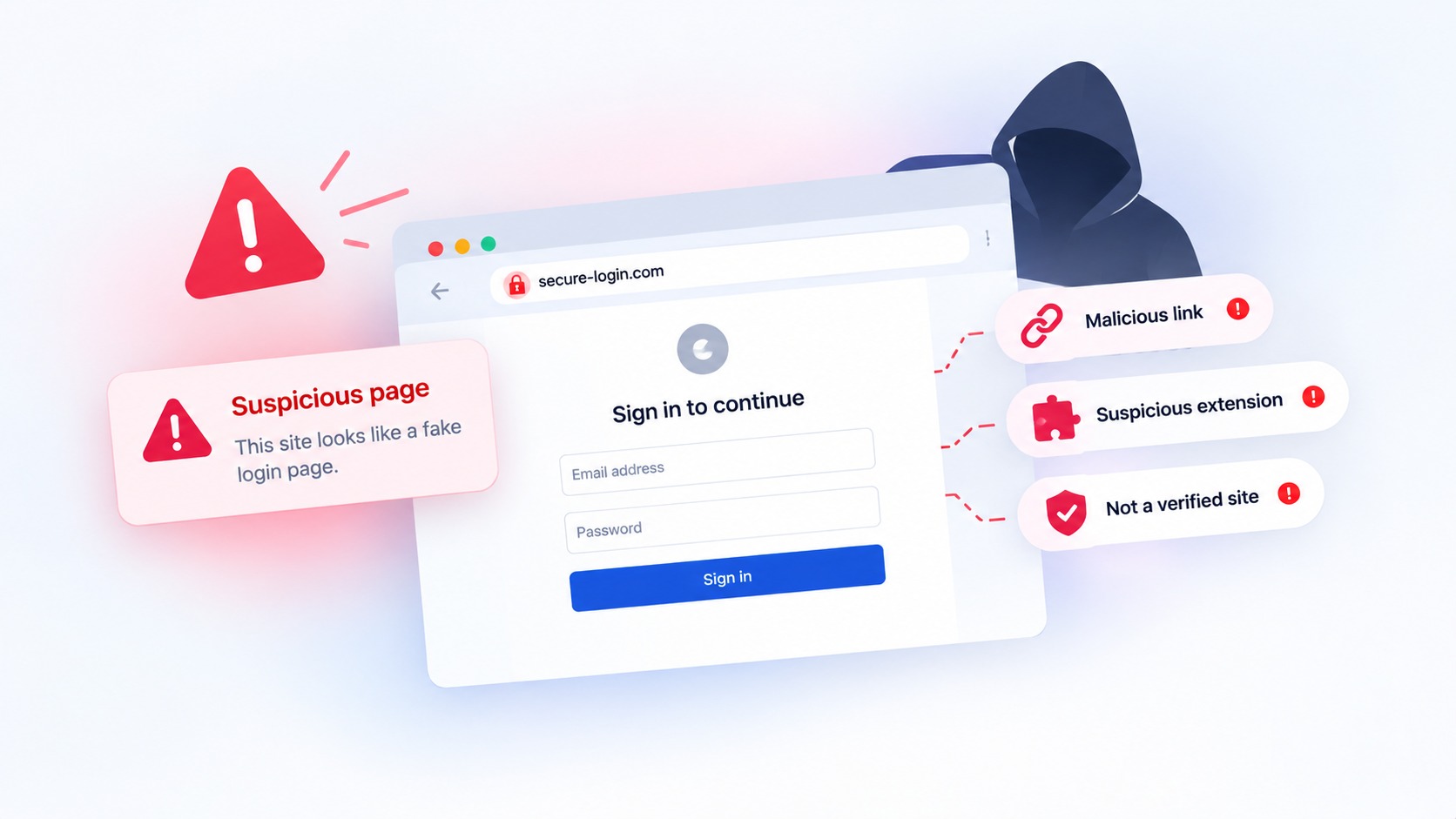
Fear Has Been the Default for Too Long
I've spent over a decade in cybersecurity software: RMM tools, remote access platforms, URL filtering, endpoint protection. I've also spent that time talking to the businesses on the other end of those tools. One thing has stayed remarkably consistent across the industry the whole time. We lead with fear.
Breach statistics. Ransomware horror stories. Users told, over and over, that they're one click from disaster.
Here's the uncomfortable part. It isn't working.
Keep your business safe from online threats
Haven for Business protects every employee from phishing, fake sites, and browser-based attacks.
The Threat Is Real. The Response Isn't Working
The data backs up the concern. Over 90% of cyberattacks begin with phishing (CISA), and generative AI has cut the time to build a convincing phishing email from roughly 16 hours to about 5 minutes (IBM X-Force), which means attackers can produce far more of them. Even so roughly one in three untrained employees will still click a phishing link before any security awareness training takes effect (KnowBe4).
Whether that training happens in-house or gets delivered through a managed provider, the pattern is the same. More tools. More programs. More warnings. The attacks still land.
For decades, cybersecurity has been framed as a compliance exercise rather than a human one. Employees get handed annual awareness training and told not to click suspicious links. The training expires the moment they finish it, and security becomes something that happens to other people rather than something they feel capable of owning.
A frightened user isn't a secure one. A disengaged user isn't either. An industry built on worst-case scenarios has mostly left people with two responses: panic or indifference.
The Question We Should Have Been Asking
What if we built security around trust instead?
Most tools are optimized to catch bad things and announce them loudly. A trust-first approach is optimized to confirm good things clearly, and surface real threats only when they genuinely matter. The result is a user who pays more attention to security signals, not less, because those signals haven't been devalued by constant noise.
Calm by Default
When trust becomes the foundation of a security product, the experience changes. It gets simpler. More confident. Calm.
That is the philosophy behind Haven. Haven is not a blocker. It does not interrupt workflows or lock people out of sites. It sits in the browser, confirms when things are safe, and flags when something is worth a second look. No sirens. No red screens. Just a calm, steady presence that helps users make better decisions without making them feel watched or restricted.
Businesses and MSPs Understand This Better Than Anyone
Anyone who has run IT for a growing business, or run it on behalf of one, knows the same tension. You're constantly navigating the line between protecting people and keeping their trust. Lockdowns create friction, and when IT becomes the team that says no, people find workarounds, which is often worse than the original risk.
That tension shows up the same way whether security is handled by an internal team or an MSP. Phishing isn't a technical failure so much as a human one. The vulnerability isn't in the software or the network architecture. It's in the moment a person decides whether to trust what's in front of them. That means the quality of someone's relationship with their security tools matters more than most stacks are built to account for. A user who trusts their tools, understands what the signals mean, and feels supported rather than surveilled is one of the strongest defenses any organization has, and one of the strongest things an MSP can point to when showing a client the value of the relationship.
It's Time to Build for Confidence, Not Fear
The cybersecurity industry built its reputation on urgency, and that urgency was warranted. The threats are real and the stakes are high. But urgency without usability is just stress, and a stressed, disengaged user is one of the biggest vulnerabilities any organization has, whether that organization manages its own security or relies on a partner to do it.
Trust is a better foundation. Calm is a better experience. The industry has spent decades telling people what to fear. It's time to start telling them when they're safe.