A new ransomware campaign is spreading through a simple trick: an email that claims to come from Interpol. It tells a small business owner their company is under investigation, that investigators have obtained evidence, and that they need to review the attached file. There is no sophisticated exploit here. The whole attack rests on one thing working, which is that the message feels real enough to act on.
That is exactly why it matters for anyone thinking about browser security for business. The weakest point in most small companies is not an unpatched server. It is the ordinary moment when a person decides whether to trust what is in front of them.
What actually happened
Security researchers at Bitdefender documented a campaign that impersonates Interpol to target small businesses across the US, Europe, Asia, and the Middle East, spanning industries from pharmaceuticals and food to technology, media, and legal services. The lure is a phishing email warning that the recipient's organization is under investigation for suspicious activity, complete with the urgency you would feel if a real law enforcement agency contacted you.
Victims are told to download a password-protected archive, hosted on a legitimate cloud service, to review the supposed evidence. Open it, and the file that looked like a harmless video turns out to be ransomware. It encrypts local systems and directs the victim to negotiate payment through a peer-to-peer messaging app.
Here is the detail worth sitting with. Bitdefender described the malware itself as rudimentary, with a hardcoded password and few of the features you would expect from a major ransomware operation. In the researchers' own words, even relatively simple malware becomes a serious threat when it is paired with convincing social engineering. The code was ordinary. The manipulation is what made it dangerous.
Why small businesses are the target
There is a common assumption among smaller companies that they are too small to be worth a criminal's attention. The data says otherwise. In a CrowdStrike survey, 29 percent of businesses with fewer than 25 employees had been hit by ransomware. Sophos reported that ransomware accounted for roughly 70 percent of the incidents it investigated at small businesses. Attackers are not overlooking small companies. They are choosing them.
The reason is practical. Many small businesses run without a dedicated IT or security team, without a formal incident response plan, and without regular security awareness training. At the same time, real regulatory and compliance notices are a normal part of doing business, which makes an unexpected investigation notice easier to believe. A criminal does not need to break your defenses when they can borrow the authority of an agency you already respect.
The real problem: looking legitimate is not the same as being legitimate
The old advice for spotting scams no longer holds up. We used to tell people to watch for bad grammar, strange logos, and obvious mistakes. Today a phishing message can carry a real agency's name, professional formatting, a plausible sense of urgency, and a link to a genuine cloud service. Every visible signal can look correct while the intent behind it is anything but.
This is the heart of the challenge for browser security for business. The decisive moment does not happen when malware runs. It happens earlier, at the point where a person clicks a link, lands on a download page, and decides whether to continue. By the time a file is open, the trust decision has already been made. The question is whether anyone helped the person make it well.
Where Haven fits
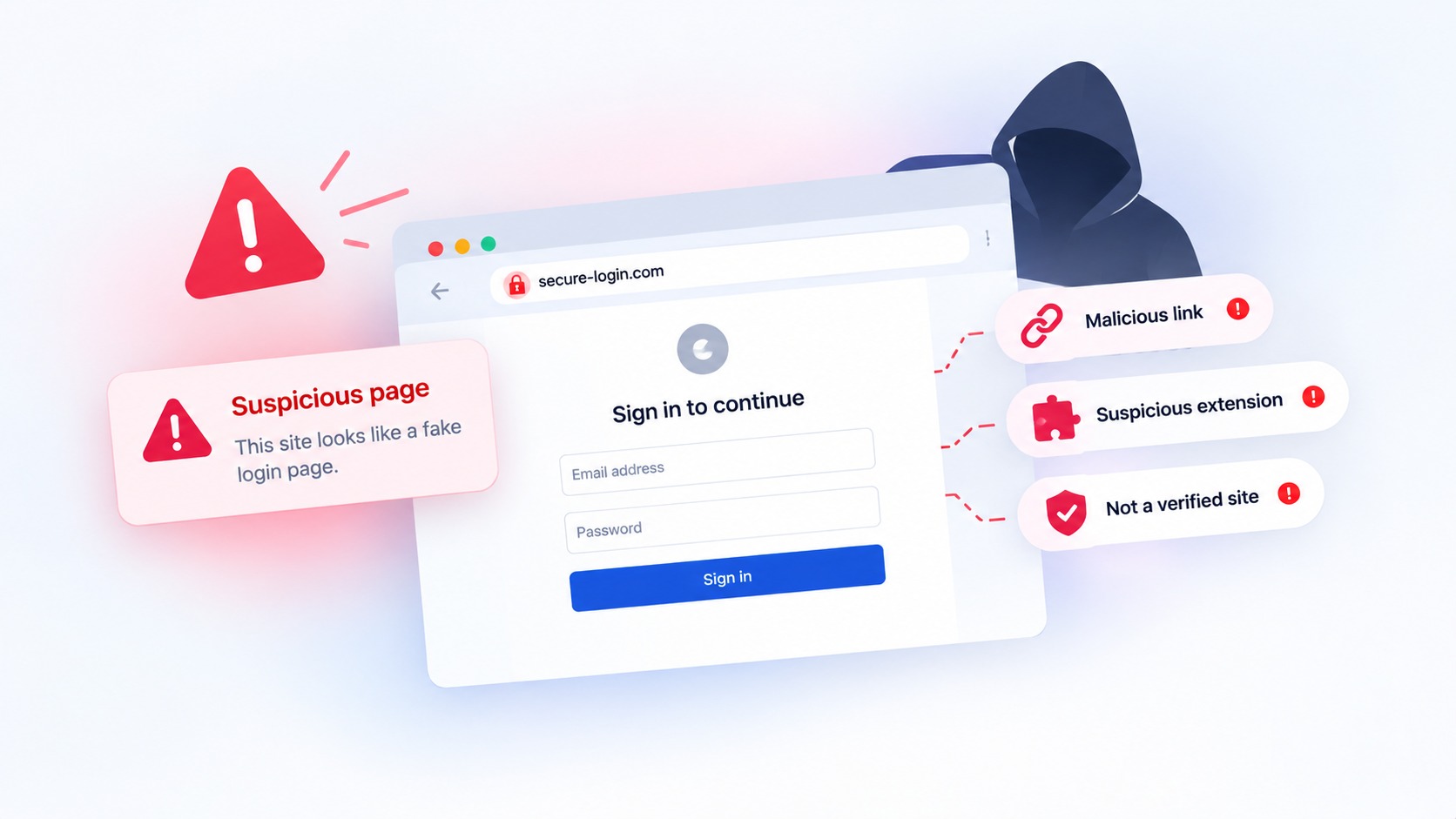
Haven is a browser-security companion built for that exact moment of decision. Rather than relying only on a person to recognize a scam under pressure, Haven is designed to catch the signs of manipulation as they happen and give clear guidance before someone acts on a message that only looks legitimate.
In a case like the fake Interpol campaign, the pressure tactics are the attack. A manufactured investigation, an urgent deadline, an impersonated authority, and a push to download a file are the pattern that social engineering relies on. Haven is built to spot that kind of pattern and help the person understand what looks off, so the safer choice is easier to make. The goal is not to fill your day with alarms. It is to give you browser-level confidence at the point where an ordinary click can turn into a costly mistake.
That approach works alongside the tools you already have. Email filters and native browser protections still catch a lot. But filters miss context, and training fades under pressure in the exact moment it is needed. Haven adds practical judgment at the point of risk, which is the layer most small businesses are missing.
To be clear about scope, no security tool can promise to stop every attack, and we will not make that claim. What Haven offers is help where small businesses are most exposed, which is the human decision at the moment of trust.
What a small business can do now
You do not need a security team to reduce your risk from campaigns like this. A few habits go a long way. Treat any unexpected message from an authority, especially one that creates urgency and asks you to download or open something, as a reason to slow down rather than speed up. Verify through an official channel you look up yourself, not through the contact details in the message. Keep offline backups so that encryption is a disruption rather than a disaster. And give the people who handle your inbox a clear, judgment-free way to pause and check before they act.
Then add a layer that helps in the moment itself. Browser security for business is no longer just about blocking known-bad sites. It is about supporting the person making a trust decision when a message looks convincing and the pressure is on.
The fake Interpol scam is a reminder that the most effective attacks are often the least technical. They work by borrowing authority and manufacturing urgency. Haven is built to catch that kind of manipulation and help your team decide what to trust, calmly and with confidence.
Haven is free for individual use and is operated by MirrorTab, Inc.
FAQs
What is the fake Interpol ransomware scam?
It is a phishing campaign in which criminals send emails that impersonate Interpol and claim the recipient's business is under investigation. The email pressures the person to download a password-protected file to review supposed evidence. The file is ransomware disguised as a harmless document or video, and opening it encrypts the company's systems. Security researchers at Bitdefender documented the campaign hitting small businesses across the US, Europe, Asia, and the Middle East, as reported by Dark Reading.
Why are small businesses targeted by ransomware?
Small businesses are targeted because they often lack a dedicated IT or security team, a formal incident response plan, and regular security training, which makes them easier to reach. The idea that a company is too small to be a target is a misconception. In a CrowdStrike survey, 29 percent of businesses with fewer than 25 employees had been hit by ransomware, and Sophos found ransomware made up roughly 70 percent of the incidents it investigated at small businesses.
How does social engineering make ransomware work?
Social engineering makes ransomware work by convincing a person to take an action they otherwise would not, such as opening a file or entering a password. In the Interpol campaign, the malware itself was crude, but the fake investigation notice created enough urgency and false authority that people acted on it. The manipulation, not the code, is what makes these attacks effective.
What is browser security for business?
Browser security for business is protection focused on the moment a person clicks a link, lands on a page, or decides whether to trust an online interaction, which is where most modern attacks succeed. It goes beyond blocking known-bad websites and helps people make safer trust decisions when a message or page looks legitimate but is not. It works as an added layer alongside email filters and native browser protections.
How can a small business prevent social engineering attacks?
A small business can reduce social engineering risk by slowing down on any unexpected message that creates urgency and asks the recipient to download or open something, verifying requests through an official channel found independently, keeping offline backups, and giving staff a judgment-free way to pause and check before acting. Adding a browser-security layer that provides guidance at the moment of the decision helps in the situation itself.
How does Haven help stop phishing and social engineering?
Haven is a browser-security companion designed to catch the signs of manipulation as they happen and give clear guidance before someone acts on a message that only looks legitimate. It is built to spot the pattern behind social engineering, such as manufactured urgency, impersonated authority, and pressure to download a file, and help the person understand what looks off. No security tool can stop every attack, but Haven adds practical judgment at the point of risk, where small businesses are most exposed.
Is Haven free?
Haven is free for individual use. Haven is operated by MirrorTab, Inc.